


The High-Kingdom
Ah, to see the High-Kingdom, the realm of the first heroes and great hunts. It is there the Tarentians first landed, founding the capital of Shipland, and it is there all grand tales of the Tarentian Age begin. The realm is of three islands, and five realms, banded together under the rule of the High-King. Few descriptions of it are as complete as that of the Tale of Marius and Vithicar.
“The Isle of Tarent had four settlements: Shipland, Laborat, Farnar, and the Blue City. The Blue City was particularly famous as it stood not far from the mountain, where the ocean drove deep into the island and met its southern river. Its walls possessed a vaguely blue hue due to some kind of fungus specific to that area of the island although many believed the blue perhaps came from Ythmeer herself. Inhabitants of the city were particularly proud and believed themselves blessed, for it was undeniable that the city prospered. Some even argued the High-Kingship should have moved from Shipland to their city. Yet, true to Tarentian heritage, the High-King stuck to Shipland and left the other three cities to his Athachiefs, a title preserved despite the shift from tribe to kingdom. Major dynasties within the island were the House of Tarent, the House of Harnir, and the House of Phac. The first held the High-Kingship and the Blue City, often run by the High-Prince. Laborat was run by the Harnirians, whilst Farnar by Phac himself. Phac was the one to found this most recent of settlements at the very southern tip of the Isle. He ran it so competently that the previous High-King named him its Athachief.

To the east of Tarent Isle lay Northern and Southern Carn. Southern Carn is comparable to its western neighbor in prosperity although its disunity prevents it competing with the High-King. On it there are three realms run by different dynasties, all initially descendant of the Chief Tarent. The oldest and most important of the three kingdoms is that of the Odoarentian House, based in Alaricheim, where the river leaves the forest and curves back southward. To the capital’s south-west, where the river meets the beach, is its second city, Savior’s End. It is often considered a sacred site due to what is said to be Alaric’s statue on its beach. Although whether it really is or not has long been forgotten. Finally, the third and final city of the Odoarentian kingdom lays at the most western edge of the island, quite close Farnar despite the sea between them. This fishing village, which inspired the foundation of Farnar, is called Carintiar. Its citizens and those of Farnar consider themselves quite close, sometimes laughably bringing up a possible union of the two into their own little kingdom. Altogether the Odoarentian Kings are a mighty line of brave and thoughtful leader, following in their founder’s legacy. However they rule in a far more unified manner than the High-Kings, naming no Athachiefs and instead regularly visiting each of their settlements, seeing for themselves what is and isn’t.

All that is east to the river Chimerian, the one with the large lake in its center, belongs to the Neo-Tarnyan Kingdom. This kingdom was founded by a child of Tarnya, member of the Odoarentian band and daughter of Tarent. It is permitted to survive by its more powerful neighbor because it functions as a center for great warriors, chasing away the dreadful beasts of Southern Carn Isle. They base themselves on the warrior philosophy of Thearn and Tarnya, along with the harsh mindset of the old Tarnyan Peninsula. Some of these people are more beast than men and many seek what they call ‘astral breath’. These are spells, enchantments and curses that strengthen their users. Their name derives from the Neo-Tarnyan belief in Tarent as a divinity. Perhaps due to his title of star-gazer, Neo-Tarnyans believe his will is manifested in the stars. Alaric, son of Tarent, is said to be the first to have such ‘astral breath’ and many Neo-Tarnyans have since attempted to acquire similar natural armor, never successfully however. Indeed they term his affliction not as a ‘Bane’ but rather as a gift, one which allowed him to near singlehandedly defeat a chimera. None have since been able to slay such a monster alone, let alone battle it for multiple days. Neo-Tarnyan towns, of which there are two, are characterised by their rudimentary style and loose leadership. They have no one king per say although they elect two leaders, one for each village, and these two guide the warrior kingdom together, as a dyarchy. Hence, there is not one important dynasty but many, and only the greatest warriors are elected kings. Of the two towns, one is situated around the lake, with its hall on the largest of its islands, and the other is down south, where the river separates into three. Their names are Natiar and Gateland. Natiar specialises in forest hunts and Gateland in mountain hunts, although both fish and occasionally practice agriculture, depending on the rulers. Overall, Neo-Tarnya is the least prosperous of the three kingdoms although its produce is the most exotic, matching and sometimes exceeding the many curiosities of the Laborat hunting grounds.
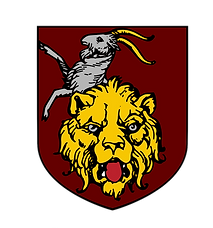
North of these two, at the other side of the central mountains cutting the island in half, lay the Petty Woodland Kingdom. It is a hostile land covered in forests and bordered by vicious peaks. What goes on inside it few know although when the High-King calls upon his vassals for the High-Gatherings and tribute, the Woodland King always shows. His garments are rough and he wears a wreath as a crown, possibly symbolising his realms allegiance to Kavac. Legends say the Woodlanders, in an almighty battle, charged into the underground tunnels, full of chimeras and lesser beasts, and slew them all in the name of their god. They then began inhabiting those very same tunnels and adopting barbaric habits. This makes Woodlanders very pale. Their numbers are small although many Neo-Tarnyan and Tarentian Band rejects join them in bitter resentment. Allegedly, were they not somewhat backwards in technology and resources, it is speculated they could defeat even the Odoarentians in battle.

Finally, on the Northern Carn Isle lay the Emerald Chiefdom. These are people who embrace tradition and their city, the Stone Towers, is a marvel of architecture. The island possesses no woods nor mountains to speak of and so its first settlers had to strike at the cliffs, mining and carving them, to acquire the material necessary. Hence, the Emerald settlement, at the very center of the island, has many clifflike towers from which one can see both neighboring islands. Its citizens, all proud craftsmen, often innovate many wonderful things out of what seems like thin air. The ruler of this the Emerald Chiefdom wields two titles, Chief-Innovator and First-Island Dweller. He is not elected however and instead his second title points to the fact that his dynasty was the first to believe in settling on the island, seeing its potential. The islanders are quite commercial in nature and believe only they understand this logic of land and craft. Although it does have distant Tarentian blood, the ruling dynasty is known as the House of Krateran, named after the island’s first settler, Kratar. If there is but one phrase a stranger should be ready for when coming to the Emerald Chiefdom it’s « we would be far better than any the Shiplanders and Carintiarians if only our island had more to give ». But they loved their island, that none could deny, and from its bosom they made many miracles. Their leader wears the finest jewelry crafted west of Ythmeer and he particularly likes flaunting it during yearly High-Gatherings.
The Sunken Isles had changed deeply since the days of Tarent and with many thousand humans across them, the very definition of ‘Tarentian’ began to change. Increasingly, the term became synonymous with Humanity west of Ythmeer, and not merely the inhabitants of Tarent’s Isle. Moreover, the complex environment of the Sunken Isles meant multiple entities had come to being including orders and warrior bands.”
Despite many centuries having passed between the days of Vithicar, the High-Kingdom remains much the same. Although, one would be remiss not to mention New-Availoire, a dastardly region east of the continent, the only one the High-Kingdom can truly claim as its own. The rest of Speros, although colonised by men of the High-Kingdom and peppered in curious realms, swears no fealty to the High-King, something he’s none too content about.